
Narsuitus
-
Posts
386 -
Joined
-
Last visited
1 Follower
Recent Profile Visitors
597 profile views



-
... or your angle-of-view.
-
If you are happy with the 28mm on the Q2, why are you looking for another one-lens system?
-
Based on my previous experience using 24, 28, 35, 40, 45, 50, and 55mm focal length lenses in one-lens 35mm SLR and rangefinder systems, I knew that the 35 would work best for me when I purchased my Leica M6. What lenses were you using before your decision to re-enter the world of Leica M?
-
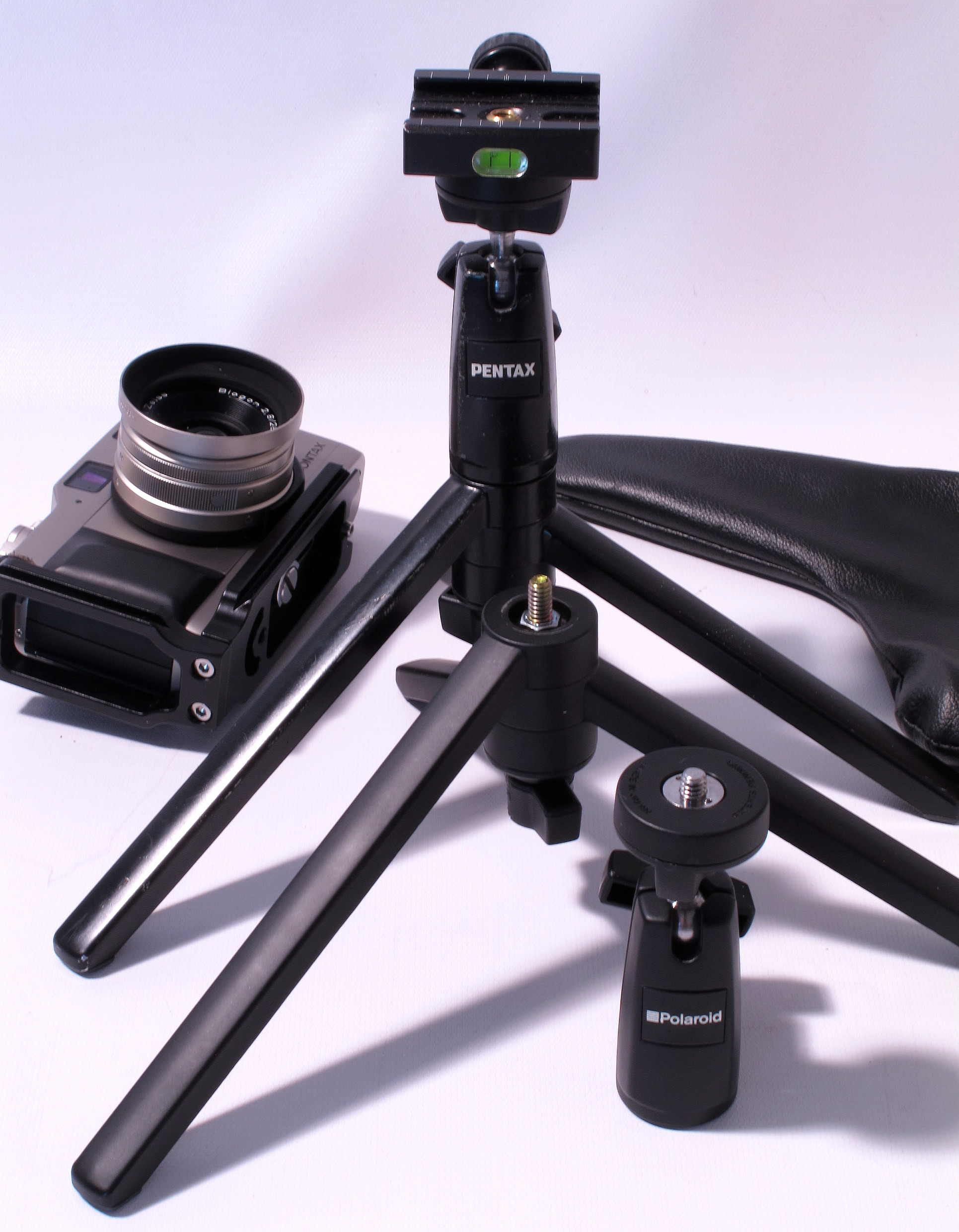
Before my M10, I owned a Leitz tabletop tripod with ball head. I sold it but later decided to replace it with less expensive but sturdy tabletops with Pentax, Polaroid, and Minolta brand names. In this photo, the tripod and ball head of the Polaroid have been separated. The Pentax tripod and the ball head are connected and there is a third-party Arca Swiss clamp attached to the ball head. I usually shoot my M10 hand held but I find these tabletop tripods very useful when I vacation travel.

-
Once, I was a firm believer in protecting the front element of my lenses with UV/Haze filters. However, while I was conducting a test between two 35mm high-resolution black & white films (H&W Control VTE film and Kodak High Contrast Copy film), I changed my belief. During the test, I shot a tripod-mounted camera with the mirror locked up and with a UV/Haze filter. I just happened to take a few test shots without a UV/Haze filter. After I developed the film and enlarged the images, I noticed that even a high-quality UV/Haze filter caused some loss of image quality. Since I needed to capture as much detail as possible in my large prints (16x20 inches and larger), I removed the UV/Haze filters from all my lenses. Since then, I no longer used protective filters on my 35mm lenses, my medium format lenses, or my large format lenses. Since then, the only time I used a UV/Haze filter was when I actually needed the filter to reduce UV light (such as when shooting film at high altitudes or in snow) or when I needed to protect my lens from damage while shooting in a hostile environment (such as when shooting mud wrestling or food fights, or when shooting in storms or in industrial plants, or when shooting dirt bike and horse races).
-
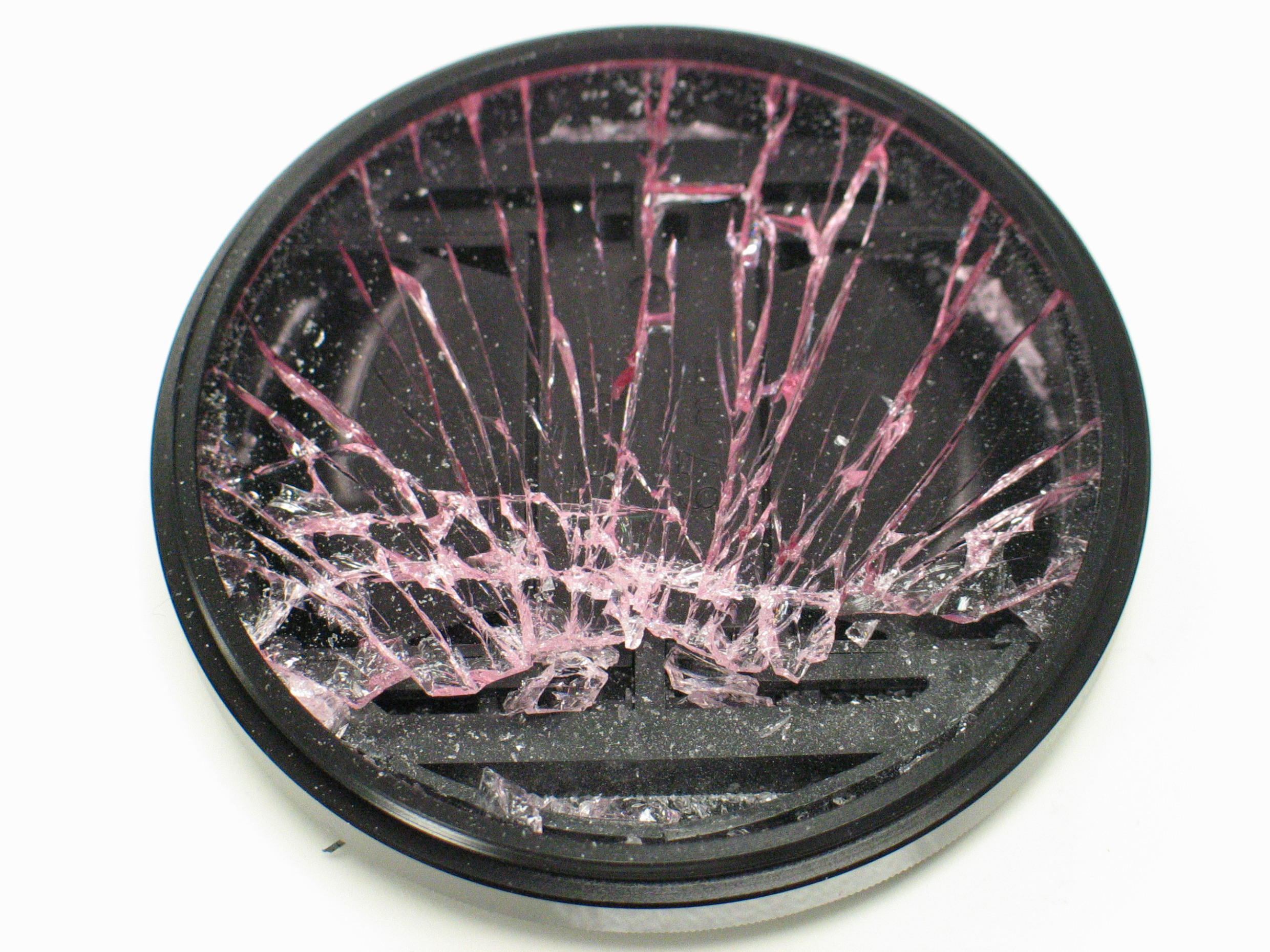
The filter shown here did not survive the fall on concrete – the camera and lens did. It is debatable as to whether the filter protected the lens or was the filter the weakest of the three.
-
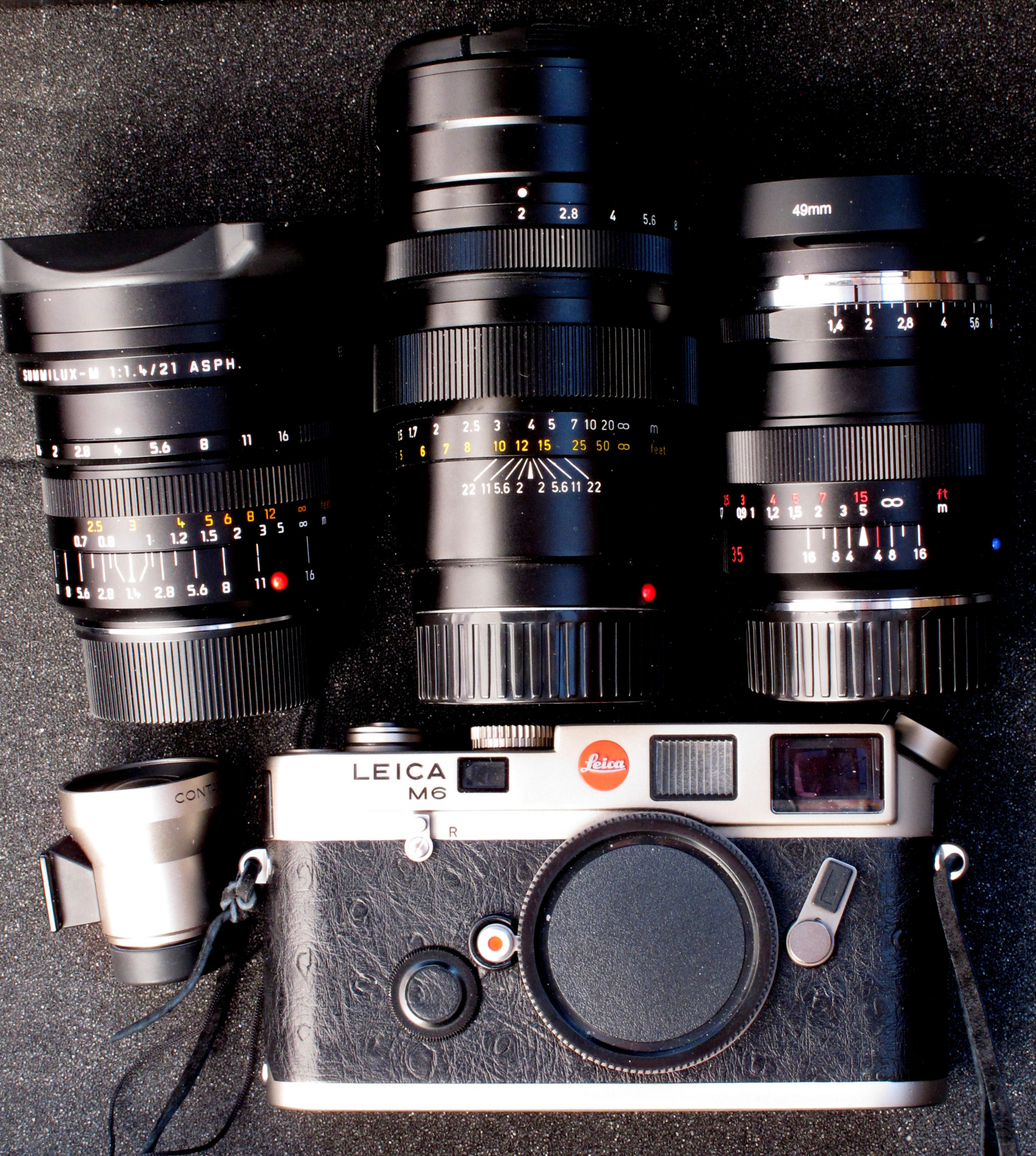
Here are the lens combinations I use for photojournalism, portraits, landscapes, documentary, weddings, and other social events: Leica M6 & M10 rangefinder body plus one lens: 35mm f/1.4 Leica M6 & M10 rangefinder body plus two lenses: 35mm f/1.4 and 90mm f/2 Leica M6 & M10 rangefinder body plus three lenses: 35mm f/1.4, 90mm f/2, and 21mm f/1.4
-
I use 2-stop, 3-stop, and 10-stop neutral density filters. Sometimes, I also use polarizing filters as neutral density filters. When using dark filters (like neutral density filters or infrared filters), I prefer using my rangefinder cameras instead of my SLR cameras. I find it much easier to focus and compose on a bright optical image rather than on a dark through-the-lens image. When using graduated neutral density filters, I prefer using my SLR cameras instead of my rangefinder cameras. I find it much easier to use the SLR to position the graduation just where I want it.
-
Leitz 21mm f/1.4 (left) Leitz 90mm f/2 (center) Zeiss 35mm f/1.4 (right)
-
Personally, I love the 35mm f/1.4 and 90mm f/2 combo. If I loved the 28/50 f/1.4 Summilux combo like you, I would keep them and get a 90mm f/2.
-
I agree ! I have had four cameras (M1, M6, M10, and Nikon F) with the same terrible design. Thank goodness I have never lost my base-plate or been tempted to eat my young. However, I prefer using cameras that do not require me to remove my camera from a tripod just to change film, access a battery, or change memory cards.
-
For my 35mm SLR, I knew that liked the 85mm f/1.8 and f/1.4 lenses that I owned and used. When shopping for slight telephoto for my 35mm Leica rangefinder, I thought I would like the 90mm f/2 Summicron and I was right. I could neither love nor hate the 90mm Elmarit because I never even considered it.
-
Before I bought my M6, I did something similar. I used a Canonet 35mm rangefinder with a 40mm lens.
-
I do something similar. If I am shooting street, I use 21/35mm with my Leica rangefinders. If I am shooting landscapes, I shoot 28/45mm with my Contax rangefinders.
-
My first 35mm SLR came with a 50mm. My first 35mm rangefinder came with a 50mm lens. Over the years, I have tried 28, 35, 40, 45, 50, and 55mm prime lenses as my everyday lens. The 35mm focal length has been my personal favorite for years. The 28mm was too wide for my taste and the 50mm was too telephoto for my taste. I have never even owned a 50mm for my Leica M6 and M10. I only use a 35mm f/1.4 flanked by a 21mm f/1.4 and a 90mm f/2.