sparkie Posted February 16, 2011 Share #21 Posted February 16, 2011 Advertisement (gone after registration) Pavalovas. em, that's right, kiwis made them. And Russell Crowe is a kiwi export. Even though those dingoes across the pond wish otherwise. Heh Link to post Share on other sites More sharing options...
Advertisement Posted February 16, 2011 Posted February 16, 2011 Hi sparkie, Take a look here Are the Leica lenses's Leica/Panasonic models, made in Germany? . I'm sure you'll find what you were looking for!
georg Posted February 16, 2011 Share #22 Posted February 16, 2011 "Does made in China vs Japan vs Germany matter anymore?" The standards are vastly different and so is the effect on quality. The old "Manufakturen" of early industrialization with lot's of manual, standardised work that can be found in China today don't exist in Germany (and hardly in Japan, either) anymore, it's about automatization of simple, repetitive processes and less numerous but highly-trained workers ("Facharbeiter") to control/ make these more complexe tasks and processes. China is about subvert standards of other countries and tight control by the regime - stable for investors and cheap, everbody and everything is replaceable - any right or law can be undermined - that's what companies like Foxconn use in China. The major difference between now and the past decades is that the financial industry has added pressure and control over companies to gain profit every quarter, making them act more shortsighted. They don't protect their investments and know-how when it brings them more profit in the short run. Therefore, they spread their know-how and achievements of their more advanced and elaborate productions sites and mentalities all over the globe with "international production networks" - and China uses that. The idea is using the experience and skill of highly-trained workers and tight relationship with R&D only for initial or high-end production and outsource/ offshore established/ stabilized production processes to low-labour-sites and therefore creating the illusion of quality/craftmanship. The production of Panasonic in Japan doesn't resemble any of these examples, Panasonic makes cheap mass-production in highly advanced production-sites in Japan (but started outsourcing again) with entirely different processes and machines than Leica in Solms - it's just a rip-off to make customers pay for a brand name. The reason why a "Panaleica"-lens doesn't live up to the expectations or stands out the way a Leica-made lens does is not because of the location of production but because of the different standards at those locations. Link to post Share on other sites More sharing options...
SJP Posted February 16, 2011 Share #23 Posted February 16, 2011 I would be very surprised if Leica is not considerably involved in the initial design, whether they need to get involved with the QC I guess depends on the required tolerances etc. Japanse engineers are very competent at QC, possibly more so than German engineers, without wishing to offend or generalise. (example is LCD manufacturing which is exclusively in Asia primarily for QC reasons). What tolerances are required is design dependent and Leica knows how to optimise that, albeit sometimes with considerable difficulty in Leica primes (35/1.4 summilux ASPH with floating element to control focus shift as an example). For the panaleica's the design criterea are much less exacting due to the smaller sensor size. Vignetting, CA, and barrel/cushion distortion are the main design targets I would expect. Anyway, whatever the case may be, why should we doubt that Leica is involved with these lenses as reported by Andy and Jaapv. Link to post Share on other sites More sharing options...
georg Posted February 16, 2011 Share #24 Posted February 16, 2011 You can find very similar (sometimes the very same - see Digilux2) lens designs and setups in most P&S-cameras, that's the reason why Panaleicas lack a distinctive "Leica-fingerprint" in their images and offer the usual performance. Unique performance? Setups? Zoom-ratios or speed? Better mechanics? The Panaleicas have the very same average performance as a Canon or Nikon P&S for a reason. Even if Mr. Peter Karbe and his team ran the basic design through their computers in Solms, it's not a Leica-lens in any way. I hate this marketing-BS, just like Leica claimed the Kodak-sensor is "Leica-engineered" - it's not, they just send their specificiations to Rochester. This "nitpicking" is crucial for the people working in Solms/Wetzlar, the moment customers only care about the brand, their jobs and know-how are lost, that's why I'm picky! LCD-panels are manufactured in countries which offer "generous" conditions to build a large fab while many machines, base materials and lot's of know-how is derived from countries like Germany (60% of the liquid crystals are made in Germany by Merck) - plans to establish an own panel-production was stopped in 1993 (!!!) because the labour-costs would just be not competitive... That's the German way: give away the know-how for free, then buy it cheap elsewhere... But again, Japan is not China,, the difference between Germany is not about the engineers, it's the "Facharbeiter" or craftsman which can be found for traditional crafts like making Sushi or forging swords in Japan - but not for machining, electronics or fine-mechanics - an educational system for these workers wasn't established there, it's "training-on-the-job" like in the US. Link to post Share on other sites More sharing options...
ho_co Posted February 16, 2011 Share #25 Posted February 16, 2011 ... Panaleicas lack a distinctive "Leica-fingerprint" in their images and offer the usual performance.... Somewhat off-topic, but at least on some cameras (e.g. Digilux 2), Leica's firmware produced different results from those of the Panasonic equivalents. At the time of the D-Lux 3, LFI maintained that Leica's firmware was different on all the Panaleicas except the D-Lux 2. This was confirmed in the forum, I think, by Michael Hußmann, who IIRC said that the Leicas offered a different JPG color palette. ... Even if Mr. Peter Karbe and his team ran the basic design through their computers in Solms, it's not a Leica-lens in any way... There you differ with the folks at Panasonic, who according to the thread linked above (http://www.l-camera-forum.com/leica-forum/digital-forum/113777-how-leica-panasonic-lumix-lenses.html#post1207591) said it took a lot of effort to get their initial designs up to Leica's specs. IMHO, if Leica says it's good enough for them, it's fair to say it's a Leica lens whether or not other lenses approach its performance level. ... Leica claimed the Kodak-sensor is "Leica-engineered" - it's not, they just send their specificiations to Rochester.... If Leica said "this is what we need" and Kodak built it, I don't see a problem with calling it "Leica-engineered." It's unique to Leica; Kodak simply has the expertise to realize it. To return to the thread topic: Panaleica lenses are made in Japan or China or Thailand or wherever by Panasonic or Panasonic's subcontractors to specifications approved by Leica. Link to post Share on other sites More sharing options...
John Thawley Posted February 17, 2011 Share #26 Posted February 17, 2011 But again, Japan is not China,, the difference between Germany is not about the engineers, it's the "Facharbeiter" or craftsman which can be found for traditional crafts like making Sushi or forging swords in Japan - but not for machining, electronics or fine-mechanics - an educational system for these workers wasn't established there, it's "training-on-the-job" like in the US. WOW... just WOW. Sushi and forging swords? I suppose the Italians are only good for spaghetti and the Mafia? Perhaps the more open minded forum members might find these two pages of interest: LEICA DC Lens | LUMIX | Digital Camera | Panasonic Global Link to post Share on other sites More sharing options...
adan Posted February 17, 2011 Share #27 Posted February 17, 2011 Advertisement (gone after registration) What does Australia make? Vegemite - Wikipedia, the free encyclopedia As to the original question - all of Panasonic's lenses are made in Japan, including those on cameras sold through Leica. If the lenses meet standards agreed to between Leica and Panasonic, they can carry the "Leica" name. Otherwise, they carry the "Lumix" name. "Leica" on a Panny lens is a stamp of approval, nothing more nor less. The one possible exception to this is the lens of the Digilux 2, which was a unique project instigated by Leica. But even then, while Leica may have had more than the usual amount of a priori design input, the lenses came off the Panasonic assembly line and went on to LC-1 and D2 cameras indiscriminately. Link to post Share on other sites More sharing options...
Guest stnami Posted February 17, 2011 Share #28 Posted February 17, 2011 Australia makes for a great place to live,,,,,,,,,, economy is great house prices didn't crash and the dollar is worth more than the US$............ Link to post Share on other sites More sharing options...
hunz Posted February 17, 2011 Share #29 Posted February 17, 2011 House prices are ridiculous though. Waiting for the bubble to burst Link to post Share on other sites More sharing options...
Guest stnami Posted February 17, 2011 Share #30 Posted February 17, 2011 They will fluctuate go down as they have before, probably 10-15 percent but then revive again .......... the bubble won't burst housing shortage. Then again you are probably speculating from a cold and dank place.......... Link to post Share on other sites More sharing options...
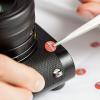
georg Posted February 17, 2011 Share #31 Posted February 17, 2011 @John Thawley I was referring to basic differences in standards, one of them is the educational system. The majority of workers in German production is trained by the company and special "technical colleges" for up to 42 months before they start working in their jobs. They can get further training to become a "techniker" or "Meister". Panasonic for example honors this title by giving it to workers with special responsibilities and training but not in a way it is done in Germany. Some "facharbeiter" are idiots that could work as bad with a 6 weeks training, other are genius which can understand complex technologies by simple using it - but in average, this educational system makes a difference - engineers were lost without good "facharbeiter", some "Meister" are even more powerful and respected than engineers. Stefan Daniel (Product manager) is not an engineer - he is a factory-trained craftsman! i'm often asked what "Made in Germany" is about and if "German engineering" made in Eastern Europe isn' t the same on a different location - this educational system isn't established - it's too expensive - they just want cheap labour. It's different all over the globe, Japanese can make more than Sushi or forging traditional swords - but due to the unique education they can do this in a unique way, the French have a much more elaborate system to train cooking than the Germans do, the Swiss have unique know-how in watchmaking (which was lost in Germany due to WW2 and was sold to Glashütte after reunion - Swiss know-how. I want to buy an Ebony - a Japanese large-format camera made by craftsman ("san") unlike the chinese copies. I hope this makes my statement a little bit clearer and shows why Solms/ Wetzlar is crucial for Leicas survival - they destroyedenough already in the past decades, we don't need more red dots, we need craftsmanship!. Link to post Share on other sites More sharing options...
pgk Posted February 17, 2011 Share #32 Posted February 17, 2011 Well, I've never used any of the Pana-Leica cameras and I have no idea just what the collaboration between the two companies actually involves. However I do have a number of friends who do use 'Leica-lensed' Panasonics and who have used other compacts, and the general consensus (because I have asked them) is that the Panasonic lenses produce excellent images, and these cameras are preferred to the others (several have re-bought Pansonics because they liked the previous model so much). Perhaps the most important point is that whilst some of them have known of Leica (but not much about Leica generally) and they do see the Leica lens as a marketing point, it is the final image quality that they like. Link to post Share on other sites More sharing options...
LinsBarroso Posted February 17, 2011 Author Share #33 Posted February 17, 2011 @John ThawleyI was referring to basic differences in standards, one of them is the educational system. The majority of workers in German production is trained by the company and special "technical colleges" for up to 42 months before they start working in their jobs. They can get further training to become a "techniker" or "Meister". Panasonic for example honors this title by giving it to workers with special responsibilities and training but not in a way it is done in Germany. Some "facharbeiter" are idiots that could work as bad with a 6 weeks training, other are genius which can understand complex technologies by simple using it - but in average, this educational system makes a difference - engineers were lost without good "facharbeiter", some "Meister" are even more powerful and respected than engineers. Stefan Daniel (Product manager) is not an engineer - he is a factory-trained craftsman! i'm often asked what "Made in Germany" is about and if "German engineering" made in Eastern Europe isn' t the same on a different location - this educational system isn't established - it's too expensive - they just want cheap labour. It's different all over the globe, Japanese can make more than Sushi or forging traditional swords - but due to the unique education they can do this in a unique way, the French have a much more elaborate system to train cooking than the Germans do, the Swiss have unique know-how in watchmaking (which was lost in Germany due to WW2 and was sold to Glashütte after reunion - Swiss know-how. I want to buy an Ebony - a Japanese large-format camera made by craftsman ("san") unlike the chinese copies. I hope this makes my statement a little bit clearer and shows why Solms/ Wetzlar is crucial for Leicas survival - they destroyedenough already in the past decades, we don't need more red dots, we need craftsmanship!. Thank you very much! Link to post Share on other sites More sharing options...
ho_co Posted February 17, 2011 Share #34 Posted February 17, 2011 ... all of Panasonic's lenses are made in Japan ... Are you sure, Andy? It's my understanding that many parts of Asian lens manufacture from all major manufacturers are outsourced to facilities in China. Sometimes that's whole lenses, sometimes just subassemblies of more sophisticated products. Link to post Share on other sites More sharing options...
mjh Posted February 18, 2011 Share #35 Posted February 18, 2011 Are you sure, Andy? It's my understanding that many parts of Asian lens manufacture from all major manufacturers are outsourced to facilities in China. Panasonic lenses used to be manufactured in Japan, or at least they were when I was visiting Panasonic’s Yamagata factory a couple of years ago and watched the lenses being ground. At a recent press event in January, Panasonic claimed they were still manufacturing most camera parts themselves – lenses (and memory cards) in their Yamagata factory, sensors in Tonami, processors (Venus Engine) in Uozu, and camera assembly in Fukushima. Link to post Share on other sites More sharing options...
jaapv Posted February 22, 2011 Share #36 Posted February 22, 2011 It does sound like Herr Daniel was pulling the group's collective leg. Nice comment. Leica employs lying senior executives... Link to post Share on other sites More sharing options...
macjim Posted February 23, 2011 Share #37 Posted February 23, 2011 As far as I understood, the lens' are manufactured by Panasonic under license. They are Leica designed but not made by Leica. At the end of the day, I'm pleased as punch with my D-Lux 5 as the lens quality is excellent, and I know it's just a Panasonic under the disguise, so, stop worrying and enjoy using it. Link to post Share on other sites More sharing options...
leic Posted February 23, 2011 Share #38 Posted February 23, 2011 The majority of workers in German production is trained by the company and special "technical colleges" A modern form of slavery. For the industries they are primary cheap workers. Unique in the world! Link to post Share on other sites More sharing options...
andybarton Posted February 23, 2011 Share #39 Posted February 23, 2011 Oh, please... Link to post Share on other sites More sharing options...
jaapv Posted February 23, 2011 Share #40 Posted February 23, 2011 Don't worry, Andy. This guy is from the former DDR and stuck in past propaganda... Link to post Share on other sites More sharing options...

Recommended Posts
Archived
This topic is now archived and is closed to further replies.